UNDER-VALUE INSURANCE WARNING

UNDER-VALUE INSURANCE WARNING

COMPASS INSURANCE offers vital advice on insurance valuations.


Arguably the most important aspect of an owner’s caravan or lodge insurance is the sum they are insured for, Compass Insurance advises. It is not always the number the customer looks at, in the first instance, but it’s the one that, in the event of a claim, becomes critical. If the estimated amount is too low, then claims payments end up being reduced. “We’ve seen a few examples where the rising cost of new caravans has resulted in customers becoming under insured through absolutely no fault of their own,” explains Richard Walker, Head of Product, Marketing and Development at Compass Insurance.

“They insure for the right amount at their new business or renewal but then six months later when they have a claim, that sum is then not enough to cover a brand-new replacement.” “We have had instances like this and have made sure that customers weren’t penalised or left worse off and paid the claim in full. “However, we’ve also heard stories where this hasn’t happened and as with any contract, and insurance is at the end of the day a contract, if it isn’t written in, then you rely on good will and good faith. “So, at Compass, and because we work with the interests of the industry at our core, we set about making sure this couldn’t happen to any of our customers.”

POLICY PROTECTION
From June 2022 every customer who insures with Compass will benefit from protection in their policy against this. Richard continues: “We’ve introduced a very simple insurance ‘instrument’ known as a Waiver of Average and written it in a way that means so long as the customer insured for an amount that was correct and adequate at the point their policy was taken out, or at their most recent renewal. “We won’t make any deduction for under insurance if they find themselves under insured due to supply chain and replacement caravan issues.

“They need to be able to show that the amount was adequate at the time, and there obviously needs to be a valid claim in the first place and no issues with policy compliance,” Richard says. “But we know this offers the protection that customers need against the unintended consequences of the caravan market right now.” No one knows where the current rise in replacement costs might end up, or how long the pressure on the supply chain will last for, but the Compass team is ready and willing to enable you to support your owners in the best way possible.

Compass Insurance
T. 0344 274 3908
E. relationshipteam@compass.co.uk
W. www.compassparks.co.uk

CASH IS STILL KING FOR STAYCATIONERS

CASH IS STILL KING FOR STAYCATIONERS

ICE CREAM PURCHASES remain a top cash purchase for UK holiday makers.

In an increasingly digital world, cash is still king for British staycationers, according to The Post Office. Research shows that Brits carry twice as much cash with them whilst on holiday in the UK compared to their day to day lives, with over £50 on average lining the pockets of Brits when on holiday in the UK.

Paying for ice cream scooped first place as the most common cash-spending occasion with parking and tipping at restaurants also shown to be common reasons for going card-less. No cash for parking was shown to be the most common financial faux pas whilst one in five Brits (21%) have literally been caught short whilst on a UK trip, finding themselves without cash for public loos.

SAFETY MELTING POT

SAFETY MELTING POT

Take a strategic site safety approach urges Ramtech's Tom Ambler...

WINTER AND SPRING are the ideal times to review a site and prepare it for the busier seasons.


Fire constitutes one of the biggest risks to the total loss of a park home, and with many sites often at lower capacity or closed during off-season, upgrading site safety and efficiency should be a top priority for site managers. Recent fire reports provide a stark warning to site owners, including how fire crews battled a large blaze at a Dorset holiday park, showcasing the chaos that fire can wreak.

Fortunately, no more than property damage was the outcome on this occasion but investing in the appropriate safety measures ahead of time, can help to reduce fire risk and help to stop a blaze quickly with the right detection in place. Preparing a site in advance of opening, by checking that the current fire safety system is working, is advisable. Any faulty wiring or machinery - particularly relating to power generators for homes or common buildings - as well as the threat of arson and vandalism should be front of mind all year around.


RAMTECH’S WES3 places the power in site owners’ hands


SHOW COMPLIANCE
Currently, holiday park site owners have a legal obligation to manage fire safety under the Regulatory Reform (Fire Safety) Order 2005 (“the FSO”). The act applies to all non-domestic premises including certain types of parks, such as those with common areas in leisure complexes, restaurants and guest houses. With park residents often mingling in these types of campsite community buildings, the threat to human life is very real.

Just a few years ago, there was an incident at a leisure facility on a campsite near Newquay, which resulted in extensive damage to several communal buildings including a swimming pool, sauna and gym. So, not only is protecting against fire a requirement under the FSO, it is also vitally important to avoid the financial implications, which can be huge.


A fire forces site owners into a massive rebuild operation, potentially putting them out of action for a season for more. A system, like Ramtech’s WES3, places the power in site owners’ hands. It’s an EN54-25 compliant connected device, that can be deployed at various points across holiday parks on stands.

It acts as an emergency response system, with automatic smoke and heat detectors responding to site incidents and maintaining 24/7 coverage through the CONNECT unit, otherwise known as the brains of the system. The WES3 is also IP55 rated, which means they are suitable for outdoor areas and won’t be affected by varying weather conditions. What’s more, the CONNECT system ensures off-site notifications can also be enabled, informing site owners and even alerting emergency authorities.


RECENT FIRE REPORTS provide a stark warning to site owners.


ROBUST FEATURES
While sites must ensure that fire safety is robust, other park management features that support the efficient and daily running of the park, are also welcome. This is where technology has evolved to help answer these added value requirements at the same time as emergency response needs. WiSE, for instance, is a reliable business information and monitoring platform providing real time alerts, data and information about security coverage. For holiday park operators, WiSE can also extend your existing security and fire system coverage, reducing the complexity and cost of enhancing your risk management systems.

The WiSE wireless security solution gives you peace of mind that your holiday park business and on- park properties are being securely monitored 24/7. Powered by long-life batteries and connected to a reliable radio technology, the system allows thousands of devices to be linked to a central base station that creates an instant alert via email, text or pager. WiSE is not dependent on SIM or WiFi to function, which is great for sites with little or no data or internet coverage.


WISE CAN ALSO EXTEND your existing security and fire system coverage.


Winter and spring are the ideal times to review a site and prepare it for the busier Easter and summer period. This should vitally include fire safety standards - as once peak season arrives, and the warmer weather attracts more visitors, the heat, coupled with popular campsite activities such as fires and barbecues, can be a real melting pot in terms of park accidents.

For more information on how Ramtech’s solutions can help protect holiday park sites, visit www.ramtechglobal.com

KEEPING YOUR CAMPERS HAPPY

KEEPING YOUR CAMPERS HAPPY

Neil Campbell, a veteran traveller, offers some friendly campsite feedback...

BOTH CANTERBURY AND HENLEY campsites have merited return trips. Pic. The Camping and Caravanning Club


As I scooped out the huge pool of rainwater in the middle of our collapsed inflatable tent with an old ice cream tub, I thought to myself “I absolutely love camping!” Ridiculous as this may sound, given that we were racing against time to bail out and re-inflate the tent before a fresh deluge, campsites always give you an adventure, memories to treasure and something to laugh about.

They are a truly analogue experience in a digital world, are eco-friendly, cheap and — especially after the pandemic — offer a huge dose of freedom. We have used campsites and holiday parks all over Britain, from the Isle of Skye to the Jurassic coast, from Snowdonia to Essex’s Mersea Island. And they have been infinitely varied — from little more than a farmer’s field with six pitches and a neighbouring bull (but a view of the Highlands) near Loch Ness, to brilliantly-run and comprehensively- equipped holiday parks in Norfolk.


WE LOVE TO MAKE the most of on-site opportunities like pond dipping. Pic Kelling Heath


MAKE OR BREAK
But the good ones all have several things in common that can make or break a camping holiday. From a veteran camper’s point of view, what is an ideal campsite? A speedy check-in process is a massive bonus and gets the holiday off to the right start, particularly after a long journey with everyone a bit grumpy. Most of the form-filling of checking-in and payment can be done online in advance, so it should be a straightforward matching of you to your pitch number and off you go.

Our most recent trip, to the Graffham campsite in Sussex in June, had check- in down to a tee — we didn’t even have to leave our car, and were checked in and being shown to our pitch within a minute or two. The staff greeting you are also critical — a cheery welcome makes a vast difference and costs nothing. And if the numbering of pitches is clear and the directions to facilities are easy to understand, you’re off to a good start. An early check-in and late check-out time is always good.


If the previous occupant has left by mid-day, there is no reason why the new one shouldn’t arrive at 1pm — really, what needs to happen in that hour? It makes a big difference if you have set up camp and are sitting down with a cuppa by 4pm rather than toiling at 6pm when painfully delicious barbecue smells start to waft around. Compare this to a lengthy check-in at 3pm, surly or indifferent staff and a confusing layout, and the difference between a well-run campsite and its opposite is clear.

I’ve also developed something of an allergy to “sign-usitis”: signs with information or warnings are fine in moderation, but a plethora of signs with rules outlawing a long list of activities have me wondering if I’m a customer or an inmate. One rule I am keen on, though, is quiet after 10.30pm — camping can be tiring! I’m glad to say that the vast majority of sites these days are well run — word gets out about the bad ones, and they tend to go out of business.


GOOD DRAINAGE is key if the elements conspire against you.


ON THE LEVEL
Pitches obviously vary hugely, and campers have different expectations depending on what type of campsite and what level of pitch you have booked — but the cost and the pitch should match. A normal-size grass pitch is not the same as a jumbo pitch with electricity and a water tap. But it is reasonable to expect all pitches to be clean, newly mown if appropriate and — my pet bugbear — decently level, or the means to make it so (such as stones to level up a motorhome, as we were able to use on a campsite in Skye).

At Graffham we had a secluded forest pitch with electricity, and it was level and large enough both for a tent and pop-up gazebo — we also had a lovely soundtrack of birds. In terms of proximity to facilities, I think a one or two-minute walk is fine — and we always take our bikes, so that can speed things up. No-one wants to be pitched right next to facilities. I would never want a pitch within earshot of washrooms — we’re talking hand-dryers and hairdryers, and with screening it’s possible to keep them out of everyone’s eyeline too.


HELPFUL SIGNS ARE FINE, but too many can leave you feeling a bit put upon.


It hardly needs to be said that facilities need to be kept clean and appropriately equipped, that is just a fundamental of a decently-run campsite. If there are coin-operated hairdryers, that is probably worth mentioning at check-in, and if there have to be time-limited button-operated showers, please can that be at least 20 seconds and not less than ten? This seems like a fairly lengthy wish- list, but campers do return to well-run sites. We’ve been back to Kelling Heath holiday site in Norfolk a couple of times over the past decade, and I remember it well from a trip when I was ten — several decades ago!

It’s a large holiday site, well-run and friendly with a great shop, and close to the coast, cycling routes and a steam railway. It’s also a fabulous site for kids, with acres of space. Canterbury and Henley campsites have also merited return trips — as well as being great sites, they are close enough for a weekend trip, and just a short drive or walk into the city. We’ve also done quite a few one-off trips to campsites for particular reasons — at Bala, in Snowdonia, we were doing an outdoor activity week including zipwiring, kayaking and coasteering, so a quiet and peaceful campsite with a great view was ideal at the end of each day.


A SPACIOUS, SHADY and secluded pitch — with added birdsong.


PREMIUM SPACE
At Norman’s Bay in Sussex, we wanted to be right by the beach. Of course, there is a premium on space at seaside sites, but this was well run by friendly staff, with a good shop and — heaven-sent given its coastal location — a visiting fish and chip van. It also had a railway station within ten minutes’ walk for car-free trips to Hastings and Brighton. Camping is pretty cheap at any time of the year, and so is great for young people — dare I mention the word “festivals”?

If you’re on a budget, it is perfectly possible to get a basic grass pitch for a tent for £12-17 per person per night, and with a coolbox it’s fine. If you go slightly out of season, you can still get great weather but lower prices, perhaps in or around summer half-term or mid-September. Larger sites with a wider range of facilities such as swimming pools do cost more, as is reasonable — you do get what you pay for. We paid about £20 per person per night (pppn) at Graffham in June and at Norman’s Bay in August, for instance, but for a basic pitch without electricity at Bala in mid-September it’s about £12pppn.

I’ve found it worth joining one of the camping, caravanning or motorhome clubs, both for their reviews and online communities, but also as a source of expertise — and for easy booking. The AA’s camping guides I’ve also found to be reliable, and I’ve used pitchup.com and Cool Camping as well to book. I will say that a set of good photos and an accurate description can often swing a decision to reserve. We tend to go away for four or five nights if we’re tent camping and go a couple of times a year. That feels like the right length given that camping is quite intense — you’re outside most of the time, and at the mercy of the elements. When we’ve motorhomed we’ve gone for one to two weeks, as you’re more self-contained and setting up and touring is easier. You even get a decent bed!

BEWARE THE SLIPS AND TRIPS

BEWARE THE SLIPS AND TRIPS

All you need to know about holiday park insurance…


WINTER IS TRADITIONALLY the time to check if your park and all its assets are properly protected against any eventuality.


As a holiday and caravan park owner or manager, the quieter winter season is often used as an opportunity to run annual maintenance checks and undertake refurbishment to interiors and exteriors where needed.
This is also a time when it is important to make sure that your park and all its assets are properly protected against any eventuality.
“Holiday park insurance can help you to identify what your park insurance needs are, and to make certain that these are provided for with a cost-effective policy,” says Dave Moffat, Director of Pib Group Insurance, the company behind the popular Park Protect scheme.
Whilst holiday parks present similar risk to many businesses there are significant differences. Holiday parks rely on the infrastructure on the park in the form of underground pipes and hook ups, access barriers, on site lighting etc and it is important that your insurance policy can cater for this.
“Many holiday parks will also have holiday home hire feet and holiday home stock,” advises Dave. “As such it is important that a parks insurance policy is able to cater for such units and also the debris removal and re-siting costs associated with replacing holiday homes. ”These are just two of many areas to consider when insuring holiday parks and it is important that your needs are professionally assessed.


REVENUE LOSS
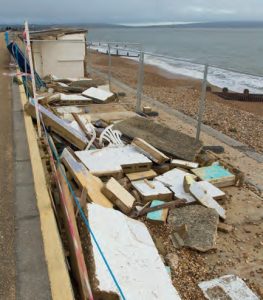
In addition to recouping the actual financial cost of rebuilding or buying new holiday homes and buildings, it makes financial sense to obtain insurance which will provide you with a cover for the loss of revenue or profit incurred following a material loss.
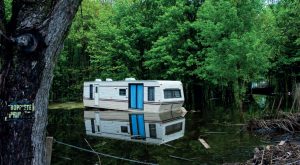
It is important that you seek professional advice in this area to make sure the sum insured and indemnity period are sufficient for your business needs and the period your business could be affected following a serious loss, such as a fire or flood.
Pib offers common sense advice: “Having members of the public stay in your caravans and spend time in your park on a daily basis also exposes you to other financial risks.
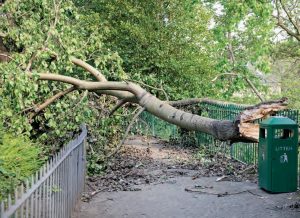
“We live in an increasingly compensation-based culture, in which some people are willing to sue for the smallest things. Though some compensation claims may be for fatuous reasons, there are also very real risks within any holiday park that could result in injury or loss.”
One indemnity limit area holiday parks do need to consider is the limit of indemnity under this cover as the levels of very serious losses has increased exponentially in recent years and claims well in excess of £5m are no longer unusual. Crucially the limit of indemnity is set at the time of the incident but the ultimate settlement amount can fluctuate depending on the calculators used for such claims at the time of settlement. It is not possible to buy additional cover after the event and if your limit of indemnity is exhausted you would be responsible for the shortfall.
All businesses with employees are required to have Employers Liability Insurance arrangements, which usually has a £10,000,000 limit of indemnity. As with Public Liability, all Holiday Parks should consider higher limits of indemnity as it is no longer inconceivable that a very serious injury to an employee could exhaust this cover. The cost of arranging such Excess Liability cover is relatively small and should be discussed with a specialist Insurance provider.


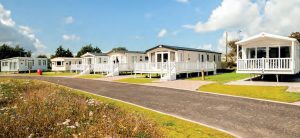
Each holiday park will have different insurance needs, depending on size and a variety of other factors. A large-scale park with hundreds of caravans will have different policy requirements to that of a smaller family run park.
Insuring more than 200 caravan and holiday parks across the UK, Park Protect provides tailor-made insurance for the specific needs of your business.
Meanwhile, with all the signs pointing towards another bumper year for the industry what do Holiday Parks need to think about in relation to Insurance.
Compass Insurance have consistently raised awareness about the importance of being insured for the right amount, whether that’s parks themselves or their owners and their individual caravans and lodges. As the costs of rebuilding and replacing park buildings and in particular, caravans and lodges increases, this places more emphasis on sums insured being accurate.
For Parks this means making sure that any buildings and infrastructure insured on their policy is accurate and in some cases a valuation or survey is a good idea especially if you haven’t reviewed this for a few years.
Analysis at the end of 2021 showed that the cost of rebuilding and repairing damaged buildings had increased 7.9% in the last 12 months and forecasts show this continuing to increase as shortages of materials and labour continue into 2022. With that in mind we’re introducing a valuation service for parks insured with Compass so they can have the peace of mind that comes with a professional valuation for their sums insured.
For the owners of individual caravans on your park this can have greater significance as the current issues with supply of new and second-hand units means that what a customer insured for in good faith just six months ago may already be less than the cost of replacing that unit in today’s market.


IN GOOD FAITH
Compass always look at what the customer insured for at the point the policy was taken out or renewed and base our assessment of any claim on that value. In 2022 our policies will also be updated to contain a provision for this growing trend so that customers don’t find themselves underinsured for no fault of their own.
Compass are renowned for our market leading Holiday Caravan and Lodge product but in 2021 they invested time and resource in developing and launching more products that parks and their customers can benefit from.
Its Residential Park Home product underwent a major overhaul including the introduction of two tiers of cover (Essentials and Extra) which enable the customer to tailor it to meet their needs, as well as the addition of Home Emergency and Legal Expenses as optional covers.


TRAVEL INSURANCE
They have also developed and launched products for owners of Touring Caravans and Motorhomes both of which give market leading levels of cover at very competitive premiums.
Finally, and new for 2022, Compass is excited to be announcing the launch of its travel insurance product for customers who book breaks on Holiday Parks in the UK.
This product has been developed specifically to meet the growing demand for UK holidays and gives the customer a wide range of cover including cancellation, curtailment and emergency assistance and also includes cover for Covid19 related illness or restrictions.

Caravan Guard (Leisuredays)
Tel. 01422 396 693
Email. park-operator@leisuredays.co.uk
www.leisuredays.co.uk

Compass Insurance
Tel. 0344 274 3908
Email. enquiries@compass.co.uk
www.compassparks.co.uk

Pib Group (Park Protect)
Tel. 01422 358 525
Email. hello@pib-insurance.com
www.pib-insurance.com

HAVEN CONTINUES UK INVESTMENT

HAVEN CONTINUES UK INVESTMENT


HAVEN ARE MAKING DREAMS COME TRUE at the Allhallows Holiday Park near Rochester.


Haven has announced a huge investment in its Allhallows Holiday Park near Rochester creating top drawer venues for both activities and entertainment.
Expanding on the Park of the Future project first introduced in 2019, Haven is now taking this concept to Allhallows creating both a new Adventure Village and Marina Bar and Stage.
The Adventure Village will provide a host of thrill seeking fun for the youngest and oldest of holidaymakers. The Adventure Village will have a host of other activities from the Multi Use Games Area to Kart and Bike hire as well as sand play and outdoor play areas.  And if you’re bringing your four- legged friend on holiday they can run of some extra steam in the Bark Yard.
A new standalone building, the Marina Bar and outdoor stage, will provide a state-of-the-art venue that can accommodate 920 guests providing more opportunities for guests to enjoy a range of day and night entertainment.
“The new developments are such an exciting development to the park,” says John Coltman, General Manager at Allhallows Holiday Park. “With the work over the next few months bringing us both a new Adventure Village and a Marina Bar and Stage, we will have something to offer all our guests and owners and having seen the work at other parks it really will be something that is quite unique to the area.
The Adventure Village will be completed ready for Spring 2022 whilst the Marina Bar and Stage will be open in Autumn 2022.

NEW IDENTITY FOR STUNNING CORNISH PARK

NEW IDENTITY FOR STUNNING CORNISH PARK

A BRAND NEW IDENTITY for the park reflects its gorgeous location near Polperro.

One of Cornwall’s most stunningly situated holiday parks has been re-christened with a new name which celebrates its unique location.
Now known as Polperro Holiday Park, it takes its title from the picture-perfect fishing port of Polperro which neighbours the park on Cornwall’s south east coast.

Owners, Park Holidays UK say the new name will help evoke far better the gorgeous scenery and magical atmosphere which awaits families coming here on holiday. The park was acquired earlier this year by the group and was previously known as Seaview Holiday Village.

The name change will also help avoid possible confusion with Seaview Holiday Park in Whitstable, Kent, which is also operated by Park Holidays UK.
Plans have been announced by the company to invest even further in Polperro Holiday Park’s facilities which include a modern indoor pool and family entertainments venue.

HEAD EAST PROMOTES WALKING ROUTES

HEAD EAST PROMOTES WALKING ROUTES


HOLIDAY PARK VISITORS Can enjoy enhanced outdoor experiences through the Head East scheme.

Head East is designed to raise the profile of Norfolk and Suffolk’s outstanding cultural offering and to boost the gradual recovery, adaptation and re-stabilisation of the region’s visitor economy in the wake of the pandemic.
Led by the New Anglia Culture Board, the year-long targeted cultural tourism campaign aims to promote and build a national profile of the East as a ‘must see’ UK cultural destination.
The original campaign was focused on 2020, but the pandemic triggered a strategic re-focus.
A €23.3 million project is promoting new walking experiences by the Interreg EXPERIENCE Project.

PARKS BREAK WINTER HIBERNATION

PARKS BREAK WINTER HIBERNATION


BOOKINGS are being extended into the winter months.


Park Holidays UK carried on for eight weeks beyond its usual closing date to allow families to enjoy November and December breaks. The group is kept 13 of its most popular parks until the week before Christmas following a “deluge of demand” for a final getaway of the year.
Park Holidays UK director Tony Clish says that the end of the October school half-term would have normally signalled the parks’ winter hibernation. “Brits have been given back their holiday freedom this year, and we’ve welcomed more families than ever in our 30 year history,” said Tony. “But it’s been obvious from the number of enquires we’ve received that many people want to holiday on through to the end of the season. “Now they will have the chance to do just that in a fully insulated holiday caravan or luxury lodge with central heating and double glazing to ensure everyone remains snug.”
Park Holidays UK operates 40- plus parks throughout England and Scotland, and Tony says their beautiful locations are well worth an out-of-season visit.

OOH LA! LA! BRITISH LURED TO FRENCH PARKS

OOH LA! LA! BRITISH LURED TO FRENCH PARKS


PARKS SUCH AS SANDGREEN Caravan Park in Dumfries & Galloway, pictured, have converted many to UK holidays.


Holiday park owners in France are training their sights on British holidaymakers in a bid to make up huge revenue losses suffered during recent overseas travel restrictions.
Helping lead the assault is French holiday parks giant Yelloh Village which operates more than 100 parks in its home country, as well as offering hot spots in Spain and Portugal.
The group, based near Nimes, has this month appointed Caravan Sitefinder to take the lead in publicising its holidays to the online booking platform’s million-plus annual visitors. CEO Michael Paul says Yelloh anticipates that mainland Europe will be fully open for business by next spring, and that many UK families will be thirsting for a continental holiday. Caravan Sitefinder, says Michael, will be actively marketing Yelloh’s parks to consumers via its huge database, and through high-profile website promotions. “The British holiday market is massively important to French park operators, and the widescale absence of UK visitors for almost two years is being keenly felt,” said Michael. “But they sense that payback time will be coming shortly and want to claim as large a share as possible of the market by going all out for bookings made this winter and spring.


LICKING WOUNDS
“This clearly has ramifications for UK park owners as they too are still licking their wounds after so many lockdowns and Covid-related cancellations in recent times. Many will be pinning their hopes on the trend for domestic holidays to continue next year, and I think they have some cause for optimism,” continues Michael.
“A lot of families have been converted to stays in this country after enjoying positive experiences this and last summer and may choose to continue doing so. “But there will inevitably be others who are now looking forward to returning to Mediterranean sunshine, and will be booking with overseas park operators such as Yelloh. So the main priority for most parks will be to seize as many bookings as possible from those intending to stay in the UK, and to do so as early as possible. “In other words, they will have to market themselves far more aggressively than this year, and not rely on travel limitations providing an almost literal captive audience,” said Michael. Yelloh’s parks, located largely on the coast and in popular mountain areas, range from simple touring sites to multi-activity centres with luxury accommodation.